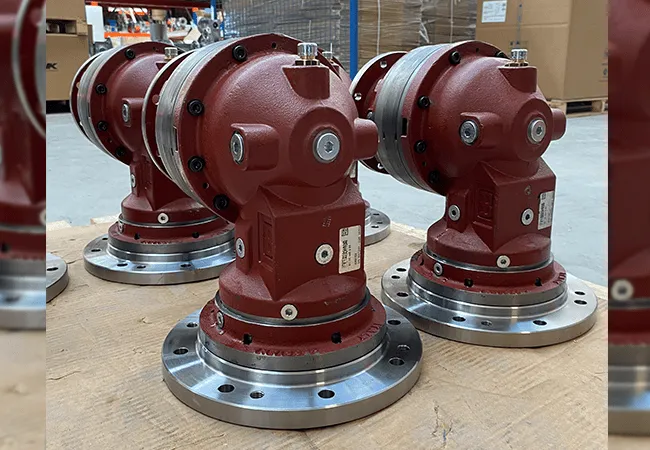
Industrial automation has transformed the way modern industries operate. From manufacturing plants and logistics centers to food processing facilities and energy production sites, automated systems are helping companies improve productivity, reduce costs, and maintain consistent product quality. As industries continue adopting advanced technologies, the demand for reliable mechanical components has increased significantly. Among these important components, redüktör systems, also known as gear reducers or gearboxes, play a key role in supporting industrial automation and machine efficiency.
A redüktör system is designed to reduce the speed of a motor while increasing torque. This function is essential because many industrial machines require controlled movement and strong mechanical power rather than extremely high motor speeds. Electric motors often operate at thousands of revolutions per minute, but automated equipment such as conveyor belts, robotic arms, mixers, and assembly machines need slower, more precise motion. Redüktör systems help create the balance between speed and force that modern automation depends on.
One of the main reasons redüktör systems are becoming more important is the rapid growth of smart manufacturing. Industry 4.0 technologies focus on automation, data exchange, and intelligent production systems. Automated factories rely heavily on synchronized machinery that can perform repetitive tasks with high precision. Redüktör systems provide the stable motion control necessary for these machines to operate efficiently and safely. Without proper gear reduction technology, automated equipment could experience unstable movement, mechanical stress, or reduced operational accuracy.
Efficiency is another major advantage of modern redüktör systems. Industrial facilities consume large amounts of electricity, and improving energy efficiency has become a top priority for businesses worldwide. High-quality gearbox systems reduce energy loss during power transmission, allowing machinery to operate with greater efficiency. This not only lowers operational costs but also supports environmental sustainability goals by reducing energy consumption and carbon emissions.
Modern redüktör systems are also designed for durability and long-term reliability. Industrial automation often involves continuous machine operation for extended periods. Equipment failures can lead to production delays, financial losses, and expensive repairs. Advanced gearbox technologies are built using durable materials, precision engineering, and improved lubrication systems that help reduce wear and extend operational lifespan. These features allow automated production systems to run smoothly with minimal downtime.
Automation requires accurate and repeatable motion, especially in industries such as automotive manufacturing, electronics production, and packaging. Redüktör systems improve precision by controlling rotational speed and maintaining stable torque output. Robotic systems, for example, depend on accurate movement to assemble products or perform detailed manufacturing tasks. Gear reducers help ensure that robotic arms move with consistency and accuracy, improving overall production quality.
The integration of digital monitoring technology has further increased the value of redüktör systems in automation. Many modern gearboxes now include sensors that monitor temperature, vibration, lubrication levels, and overall performance in real time. These smart systems support predictive maintenance by identifying potential mechanical problems before serious failures occur. This approach reduces maintenance costs and helps industries avoid unexpected production interruptions.
Different types of redüktör systems are used depending on industrial requirements. Helical gear reducers are popular for their quiet and efficient performance in conveyor systems and production lines. Planetary gear systems are widely used in robotics and automated machinery because they provide high torque in compact designs. Worm gear reducers are valued for applications requiring high reduction ratios and reliable load handling.
In conclusion, redüktör systems have become an essential part of modern industrial automation. Their ability to improve motion control, energy efficiency, precision, and machine reliability makes them critical for advanced manufacturing and automated production systems. As industries continue moving toward smarter and more efficient operations, the importance of redüktör technology will continue to grow in the future of industrial automation.